


(01)Overview
Human chorionic gonadotropin (hCG) is a heterodimeric glycoprotein hormone composed of an α-subunit shared with LH, FSH and TSH, and a hormone-specific β-subunit. It binds the luteinizing hormone/choriogonadotropin receptor (LHCGR) and is widely used as a reference agonist in gonadal steroidogenesis, receptor-signalling, and reproductive-endocrinology research.
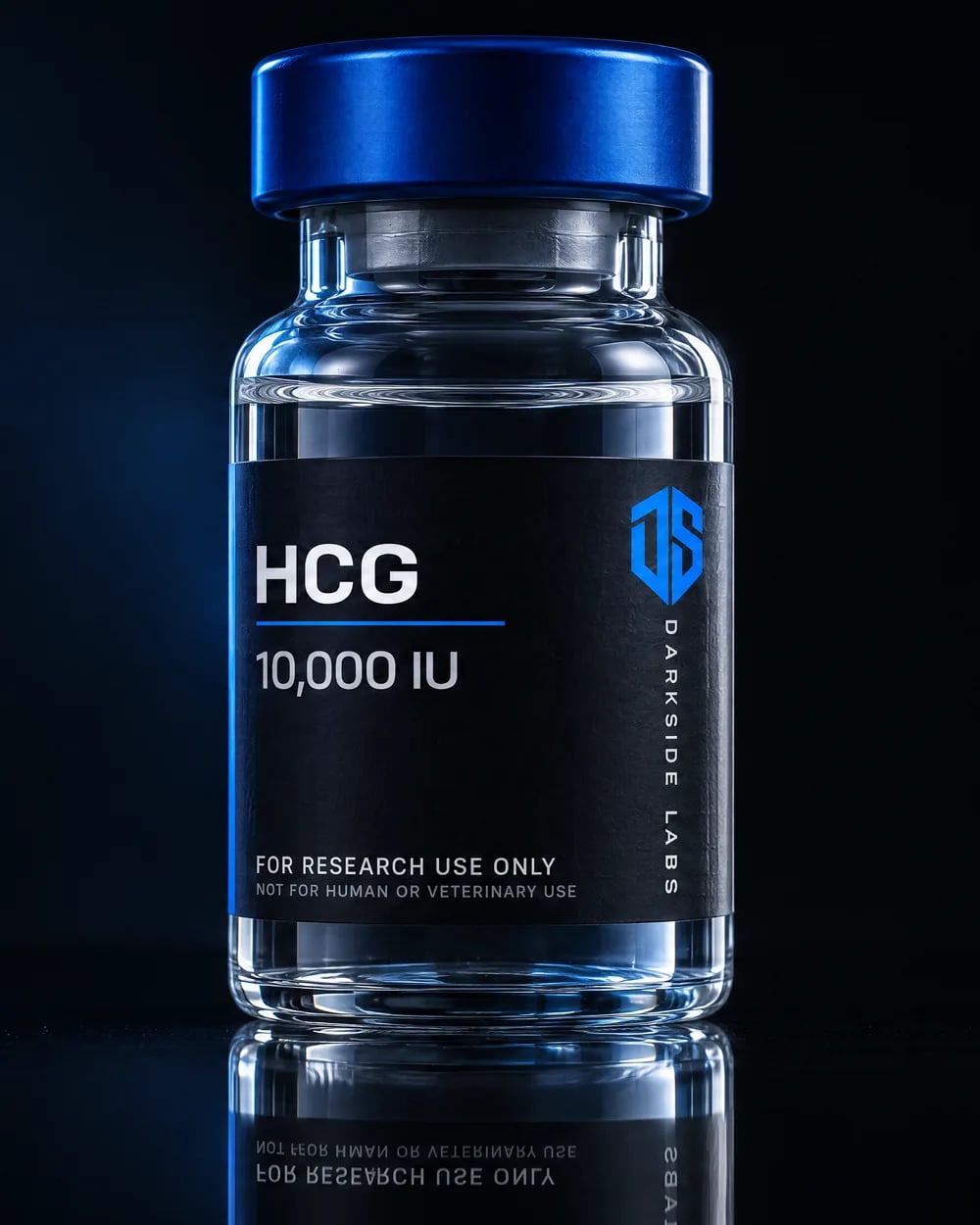
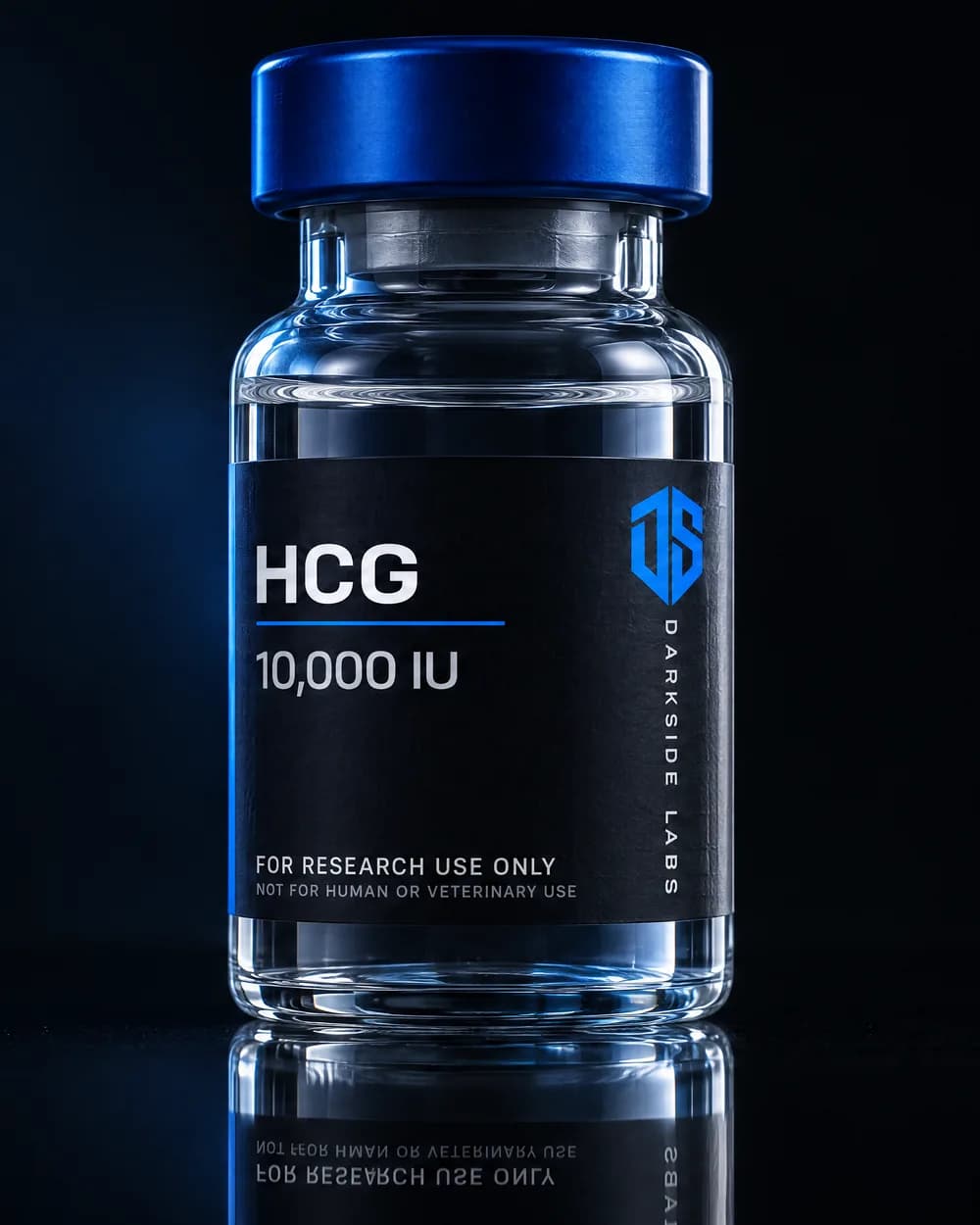
Supplied as a lyophilized powder at 10,000 IU per vial for in-vitro and laboratory research applications. Each vial is sealed under sterile conditions and traceable to a batch Certificate of Analysis.
Research areas
- Endocrine & reproductive-axis research
What hCG is
Human chorionic gonadotropin is a glycoprotein hormone made of two subunits: an α-subunit shared with LH, FSH and TSH, and a hormone-specific β-subunit. Heavy glycosylation accounts for roughly a third of its mass, which is why its molecular weight is quoted as a range.
Why researchers study it
hCG binds the luteinizing hormone/choriogonadotropin receptor (LHCGR) and is a common reference agonist for it. In-vitro uses include Leydig- and granulosa-cell steroidogenesis assays, LHCGR cAMP signalling and receptor-trafficking studies, and as a standard in immunoassay development.
What IU means
hCG is measured in International Units, a unit of biological activity calibrated against a WHO International Standard, rather than by mass. Activity, not weight, is the comparable figure between suppliers and batches. The 5,000 IU and 10,000 IU vials contain the same material; only the amount per vial differs.