



(01)Overview
GHK-Cu is a complex of the tripeptide glycyl-L-histidyl-L-lysine (GHK) and copper(II). GHK occurs naturally in human plasma, saliva and urine, and plasma levels fall noticeably with age. Its strong affinity for copper is central to its biological activity.
Published research has looked at GHK-Cu's role in collagen and elastin synthesis, glycosaminoglycan production, skin remodeling, wound healing and antioxidant activity. Gene expression studies suggest it influences a wide range of genes involved in tissue repair and remodeling.
Research areas: collagen synthesis, skin remodeling, wound healing, extracellular matrix, gene expression.
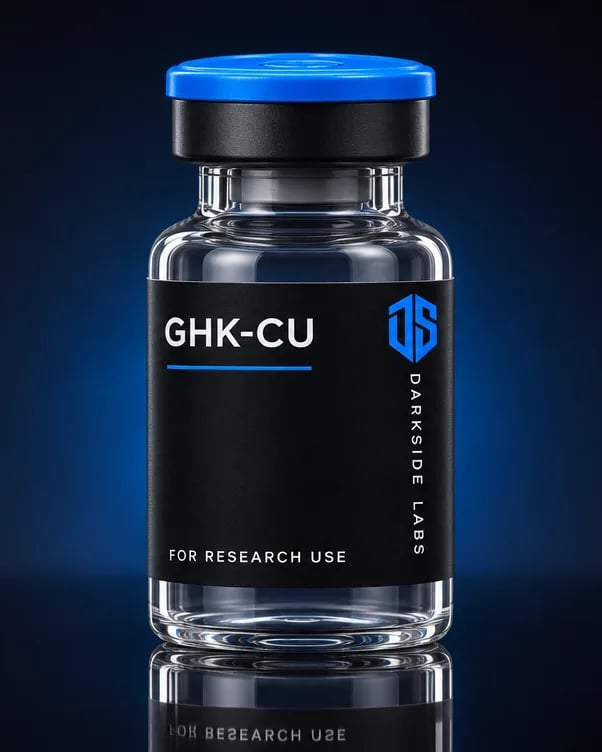
Each vial contains 50 mg of lyophilized GHK-Cu. Every batch is third-party tested, and a COA is available for each lot.
For research use only. Not for human or veterinary use.
Research areas
- Tissue repair & recovery research
- Cellular aging & longevity research
What GHK-Cu is
GHK-Cu is the tripeptide glycyl-L-histidyl-L-lysine bound to a copper(II) ion. GHK was first isolated from human plasma in the 1970s; it binds copper with high affinity, and plasma levels fall with age. The copper complex gives the powder and its solutions a characteristic blue colour.
Why researchers study it
Published work covers collagen, elastin and glycosaminoglycan synthesis in fibroblasts, extracellular-matrix remodelling, wound-healing models and antioxidant activity. Gene-expression studies report that GHK shifts the expression of a large number of genes linked to tissue repair, which makes it a common reference compound in skin-biology research.